

DIGITAL TWIN SOLUTION
Next-Generation Infrastructure Intelligence
Connect physical infrastructure with real-time data, intelligent models and predictive analytics. Our Digital Twin solutions help governments, utilities and industries monitor assets, simulate future scenarios and make better lifecycle decisions.
OVERVIEW
Digital Twin Solutions
Our Digital Twin platform creates a dynamic virtual representation of physical assets, processes and infrastructure networks. Real-time data from sensors, SCADA systems and field equipment is combined with GIS information, engineering models, maintenance records and analytical tools. Operators and management teams can use this shared environment to understand current conditions, compare actual performance with design expectations and test future scenarios. The platform can support water utilities, treatment plants, flood-control facilities, irrigation systems, industrial parks and smart-city assets, strengthening planning, maintenance, training, emergency response and lifecycle investment decisions.

IoT sensors and field devices

SCADA and operational control systems

GIS mapping and three-dimensional visualisation

Hydraulic and process models
Hydraulic and process models

Cloud, desktop and command-centre interfaces
MAIN APPLICATION CATEGORIES
Smart Water Utilities
Monitoring pipelines, reservoirs, pumps and distribution networks.
Water & Wastewater Treatment Plants
Operational visibility, process monitoring and asset planning.
Flood Management & Emergency Response
Forecasting, simulation, early warning and coordinated response.
Smart Irrigation & Agriculture
Water-demand monitoring and irrigation management.
Smart Cities & Infrastructure
Integrated monitoring for industrial parks, utilities and large infrastructure assets.
Smart Aquaculture
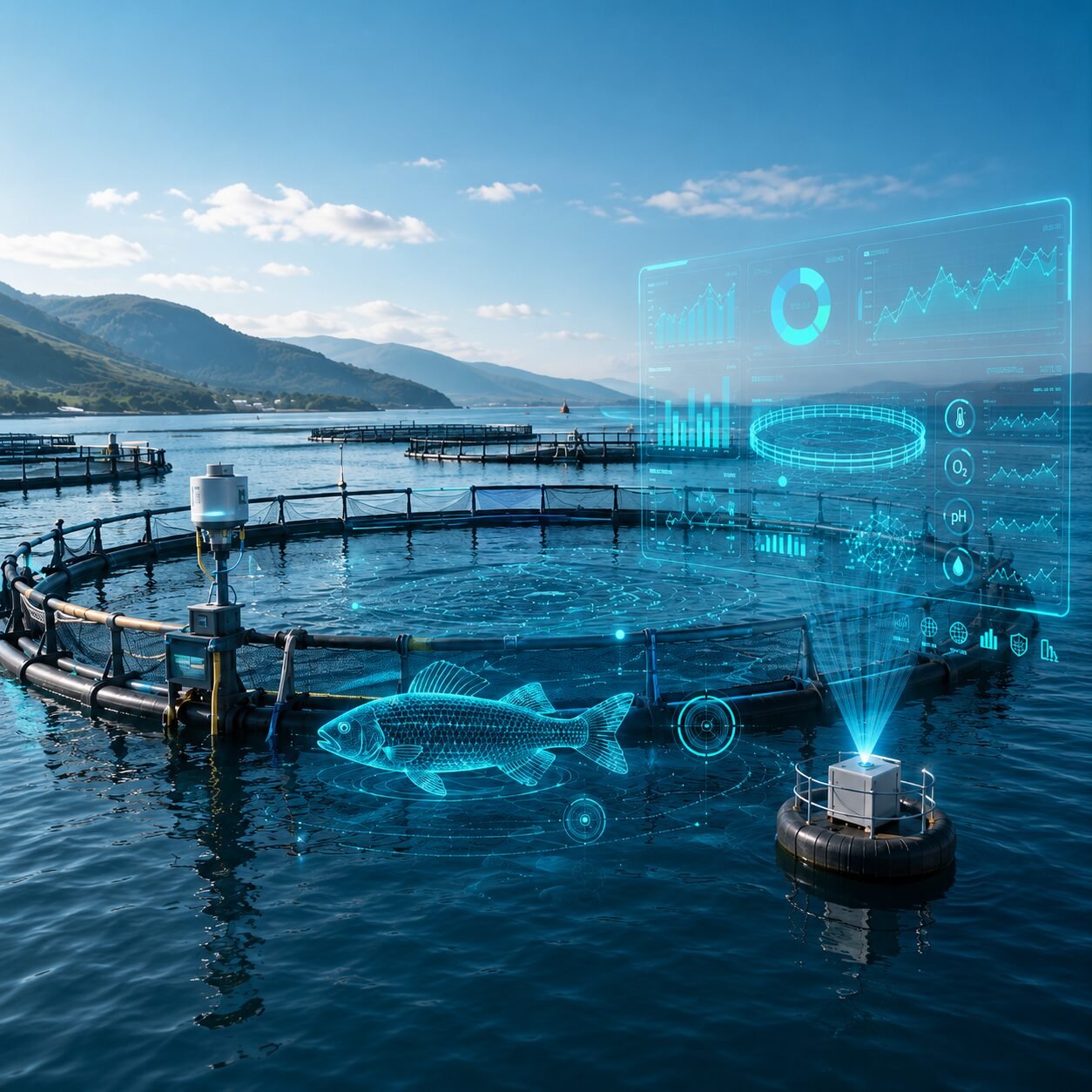
An aquaculture digital twin is a dynamic virtual representation of a fish farm or aquatic ecosystem.
Digital Twin Water Treatment System
Smarter Water Treatment Through Artificial Intelligence
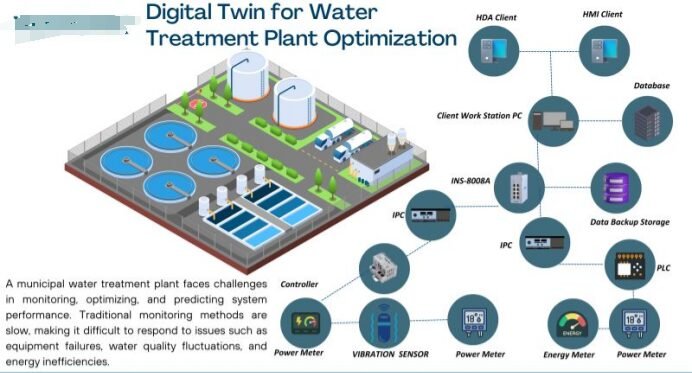
A Digital Twin Water Treatment System connects live plant data, IoT sensors, SCADA signals, equipment records, laboratory results and process models within one operational view. It can continuously analyse flow, pressure, tank levels, water-quality indicators, energy consumption, chemical dosing and equipment performance. Operators can detect abnormal conditions earlier, evaluate alternative operating strategies and compare actual performance with design expectations before making changes to the physical plant. The system can also support predictive maintenance, operator training, compliance reporting and long-term asset planning, depending on the available instrumentation and data quality.

Predictive Maintenance
Analyse equipment condition, operating trends and alarms to identify abnormal behaviour earlier. Maintenance teams can prioritise inspections and interventions before a minor issue becomes a major failure.

Dynamic Optimisation
Compare energy use, chemical dosing, flow distribution and process conditions in real time. Operators can evaluate alternative control strategies while respecting quality, capacity and regulatory constraints.
Scenario Modelling
Test “what-if” scenarios for process changes, high loads, equipment outages, weather events or future expansion without disrupting the physical plant. Results support training, contingency planning and investment decisions.
Asset Intelligence
Create a structured view of assets, condition, maintenance history and operational criticality. This improves coordination between operators, engineers, management and external service teams.
Flood Mitigation & Water Resources Management
Digital Flood Intelligence Platform
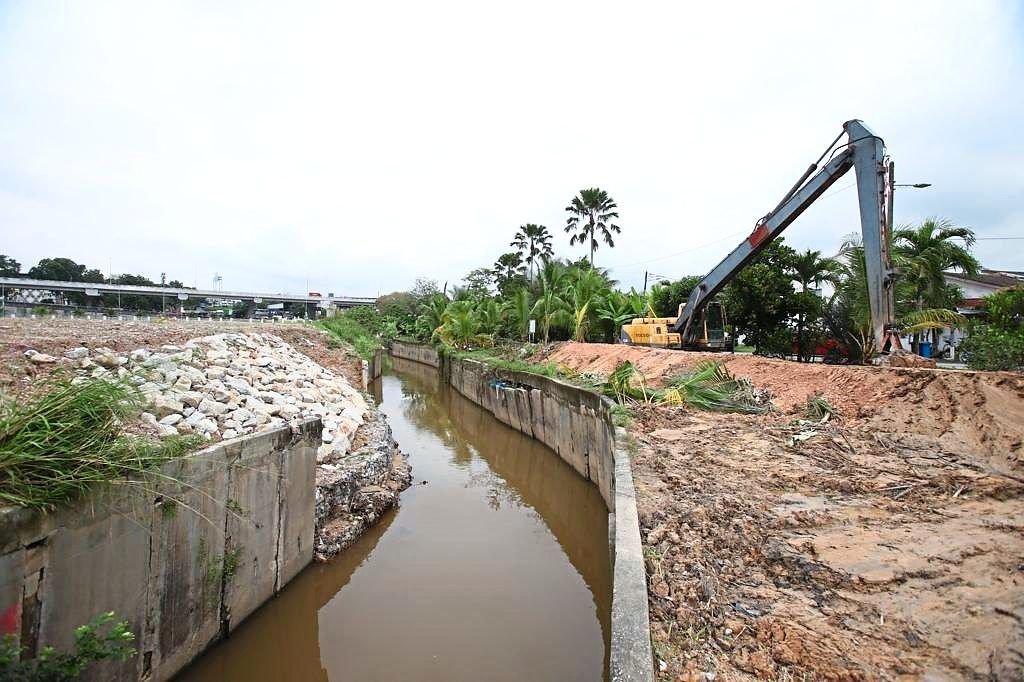
The Digital Flood Intelligence Platform combines rainfall monitoring, river and drain level data, hydrological forecasting, hydraulic simulation, GIS mapping and emergency-response workflows. Authorities can use the platform to identify changing catchment conditions, evaluate possible flood scenarios and understand how rainfall may affect rivers, retention ponds, gates and pumping stations. Automated alerts and visual dashboards support faster communication between control centres, field teams and decision-makers. During and after an event, the system can assist with pump and gate coordination, incident recording, post-event analysis and improvement of future contingency plans.

Forecast
Use real-time rainfall, river and hydrological data with model outputs to predict changing water conditions. Forecasts help teams prepare pumps, gates, personnel and emergency resources before critical thresholds are reached.
Early Warning
Deliver timely alerts to control centres, field teams and responsible agencies. Closed-loop acknowledgement and follow-up workflows improve accountability and response coordination.

Simulation
Replay historical events and test future flood or drought scenarios before they occur. Hydraulic models can evaluate bottlenecks, pumping strategies, gate operation and proposed infrastructure improvements.

Contingency Planning
Digitise emergency plans, contact lists, response procedures and resource allocation. Scenario-based exercises help teams understand responsibilities and improve readiness.

Decision Support
Present operational information through dashboards, maps, trends and risk indicators so decision-makers can understand current conditions and compare response options quickly.

Crisis Management
Support prevention, resistance, rescue and post-event review through a shared operational picture, incident records and coordinated communication between agencies.
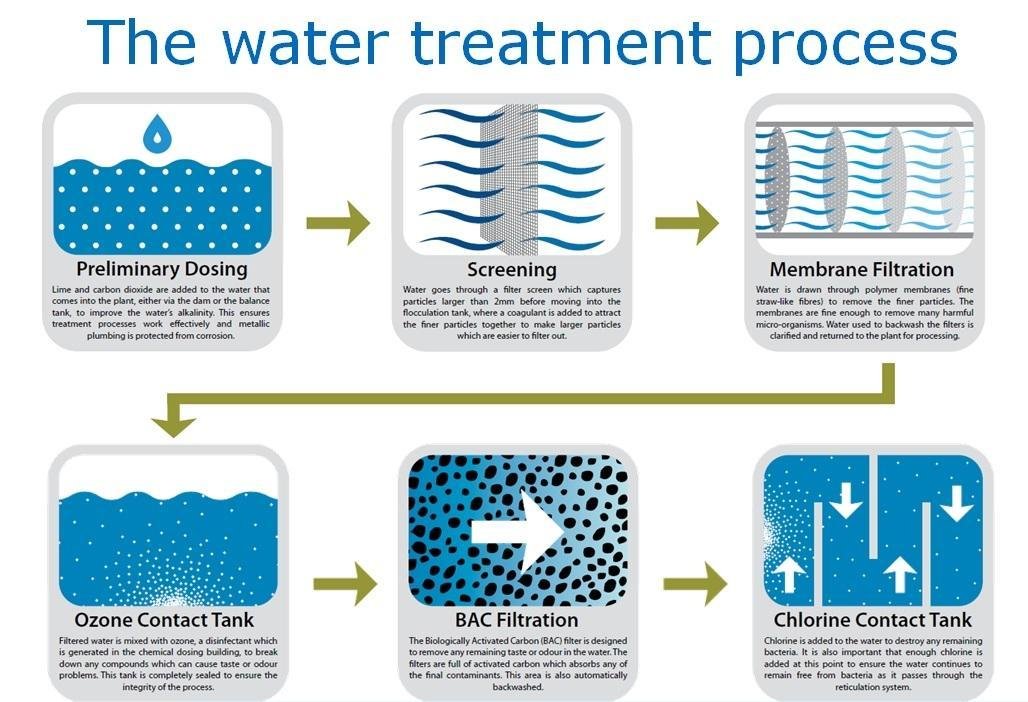
Water Treatment Solutions & Key Benefits
Complete Water Treatment Solutions
Cheng Ho International provides integrated engineering solutions for raw water, drinking water, industrial water and wastewater applications. Depending on project requirements, the scope may include process selection, hydraulic design, mechanical and electrical systems, instrumentation, automation, equipment supply, civil works, commissioning and operator training. Solutions can cover conventional clarification and filtration, wastewater treatment, desalination, water reuse, compact or containerised plants and Digital Twin-enabled smart facilities. The objective is to deliver a system that is practical to operate, appropriate for the source-water or effluent conditions and capable of meeting the relevant regulatory requirements.
Solution Coverage
- Raw Water Treatment Plants
- Drinking Water Treatment Plants
- Industrial Water Treatment
- Wastewater Treatment Plants
- Desalination and Water Reuse Systems
- Containerised and Smart Treatment Plant Solutions
Key Benefits
- Improved operational visibility and data quality
- Earlier detection of equipment and process issues
- More informed maintenance and investment planning
- Better coordination between engineering, operations and management
- Stronger resilience, compliance tracking and lifecycle asset management
Smart Aquaculture Tech
Smart Aquaculture Digital Twin
An aquaculture digital twin is a dynamic virtual representation of a fish farm or aquatic ecosystem. By integrating real-time sensor data, operational information and simulation models, it helps operators monitor environmental conditions, understand fish performance and improve daily farm management.
Key Components:
• IoT Sensors
Continuously monitor key parameters such as water temperature, dissolved oxygen, pH, ammonia levels and water flow.
• Virtual Modelling
Simulate fish growth, feeding behaviour and environmental conditions to support planning and operational assessment.
• Intelligent Decision Support
Provide timely alerts and data-driven insights when abnormal water conditions, feeding issues or potential health risks are detected.
Main Benefits

Optimised Feeding
Supports more accurate feeding decisions, helping to reduce feed waste and improve feed efficiency.
Improved Fish Health
Enables earlier detection of unusual behaviour, environmental stress and potential health concerns.

Better Water Management
Supports stable water conditions by improving the monitoring and management of water quality, circulation and waste.
Higher Operational Efficiency
Combines farm data in one system, allowing operators to respond faster and manage aquaculture operations more effectively.